


 +86 18130251359
 teflowpumps@tlpumps.com


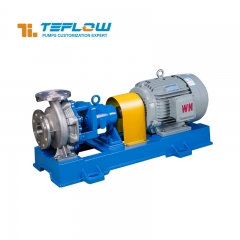
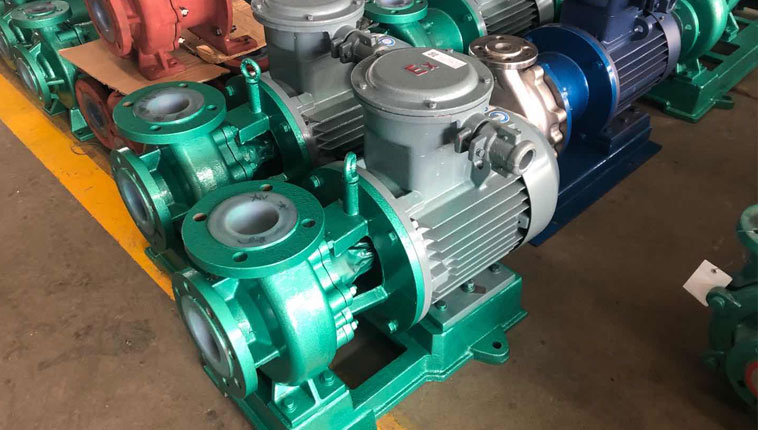
In fluid transportation systems for chemical production, chemical pumps serve as core power equipment responsible for conveying various media. They are critical to ensuring continuous and stable production operations. Cavitation is a common potential malfunction during chemical pump operation, while Net Positive Suction Head (NPSH) is the key technical indicator measuring a pump’s cavitation resistance and guaranteeing safe, steady equipment operation. Many chemical enterprises overlook NPSH, resulting in pump vibration, impeller damage, sharp drops in operational efficiency, and even production shutdowns. Today, we will systematically elaborate on the core knowledge of chemical pump NPSH and interpret its functions and significance.
To understand NPSH, we must first clarify what cavitation is. When a chemical pump is in operation, liquid enters the high-speed rotating impeller, causing an abrupt pressure drop at the pump inlet. If the pressure falls below the saturated vapor pressure of the liquid at the corresponding temperature, the liquid instantly boils and vaporizes, generating a large number of bubbles. As these bubbles flow with the fluid into high-pressure zones, they collapse rapidly and release massive impact forces that continuously strike metal components including the impeller and pump casing. Prolonged exposure leads to component wear, corrosion and perforation — this phenomenon is cavitation. As a vital parameter measuring the cavitation resistance of liquid at the pump inlet, NPSH directly determines the operational stability of chemical pumps.
The core definition of Net Positive Suction Head (NPSH) is as follows: it refers to the excess energy per unit weight of liquid at the pump inlet that exceeds the liquid’s own saturated vapor pressure. Measured in meters (m), NPSH is essentially the pressure reserve of liquid at the pump inlet. A higher pressure reserve makes liquid vaporization less likely and reduces the risk of cavitation in the pump. Conversely, insufficient pressure reserve will trigger cavitation. In industrial applications, NPSH is mainly categorized into two types, and their matching relationship constitutes the fundamental criterion for safe chemical pump operation.
The first type is Available Net Positive Suction Head (NPSHa), which represents the actual pressure reserve provided by the pipeline system to the pump inlet. This parameter is jointly determined by suction tank pressure, liquid level height, pipeline resistance, liquid temperature and other factors, and is independent of the structural design of the pump itself. For instance, the liquid level pressure of an open suction tank equals local atmospheric pressure; a higher liquid level delivers greater static pressure to the pump inlet. Larger suction pipeline diameters and fewer elbows and valves reduce flow resistance losses, thereby increasing NPSHa. On the contrary, rising liquid temperature elevates saturated vapor pressure, which lowers NPSHa and raises cavitation risks.
The second type is Required Net Positive Suction Head (NPSHr), referring to the minimum pressure reserve inherently required by a chemical pump to avoid cavitation. As an intrinsic parameter determined by pump structure (such as impeller shape and rotational speed), it is equivalent to the minimum pressure requirement for equipment operation. NPSHr cannot be calculated theoretically and shall be determined according to performance curves provided by pump manufacturers. Generally, a higher flow rate of a chemical pump corresponds to a larger NPSHr, because increased flow accelerates liquid velocity at the pump inlet and aggravates pressure loss.
The fundamental principle for safe and stable operation of chemical pumps is:Available Net Positive Suction Head must be greater than Required Net Positive Suction Head (NPSHa > NPSHr).
For operational safety in industrial production, a safety margin of no less than 0.5 meters is normally reserved. For pipelines transporting high-temperature and easily vaporized media, the safety margin shall be increased to more than 1.3 times. If NPSHa is lower than NPSHr, cavitation will occur inside the pump. This will not only drastically reduce pump flow rate and head, but also produce abnormal noise and severe vibration. In severe cases, it will cause impeller damage, seal failure, medium leakage and other safety accidents, endangering overall production safety.
In practical chemical production, cavitation risks can be mitigated by optimizing NPSH through multiple approaches:
1.Elevate the liquid level of the suction tank to enhance static pressure supplied to the pump inlet;
2.Optimize suction pipeline design by enlarging pipe diameters and reducing elbows and valves to cut down pipeline resistance losses;
3.Cool high-temperature media to lower their saturated vapor pressure;
4.Select chemical pumps with smaller NPSHr, such as models equipped with inducer impellers, which pre-pressurize liquid to improve cavitation resistance.
These measures are easy to implement with controllable costs, and can effectively prevent equipment damage and production losses caused by cavitation.
In summary, NPSH is not an abstract technical parameter, but a key indicator for safe and high-efficiency operation of chemical pumps. Practitioners in the industry need to accurately grasp the connotation of NPSH, strictly abide by the operation principle of NPSHa > NPSHr, and implement optimization measures during pump selection, pipeline design and daily operation to effectively avoid cavitation hazards and ensure continuous, stable chemical production. For the chemical industry, proficient understanding of NPSH knowledge lays an essential foundation for upgrading equipment management and reducing production risks.



 +86+0563-5093318
